
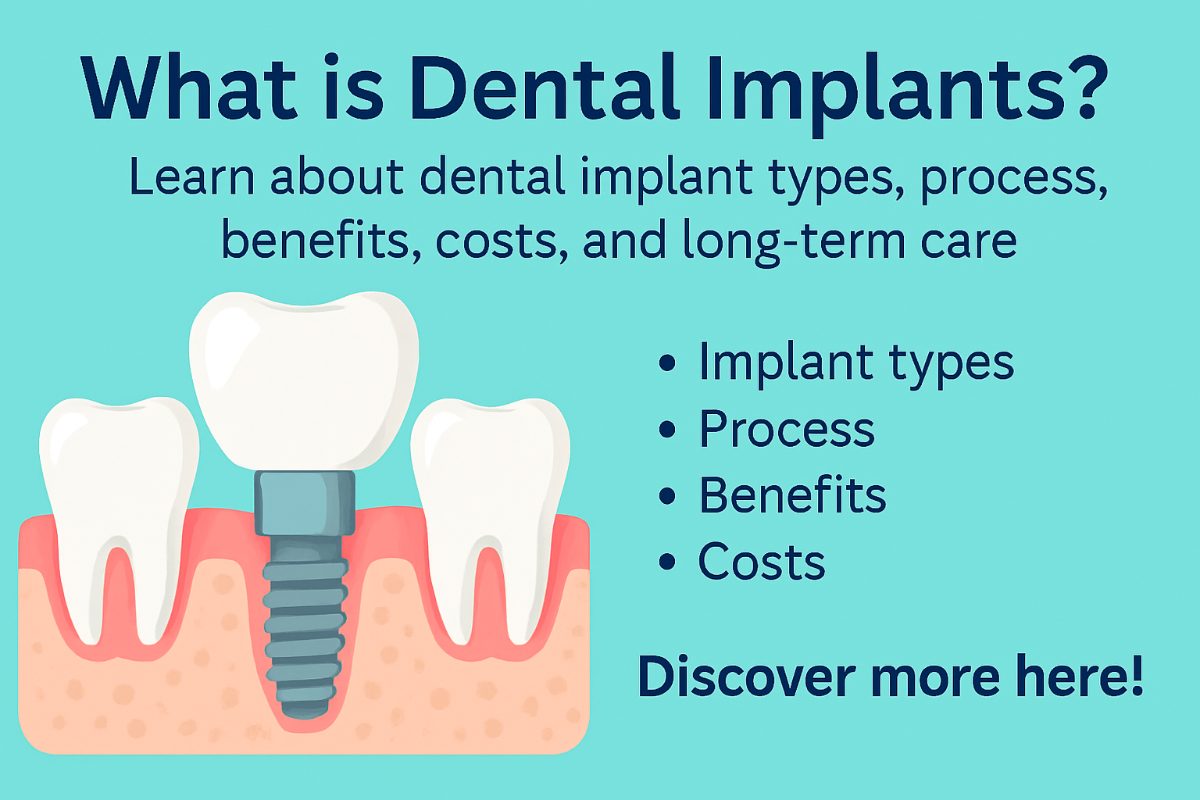
Dental implants are replacement tooth roots made of titanium placed into the jaw to hold a crown, bridge, or denture. They restore chewing, speech, and appearance more naturally than other options. This guide covers the basics, who may be a candidate, common implant types, the typical treatment steps, risks and benefits, cost basics, and how Sloan’s Lake Dental approaches implants for patients in Denver, CO.
What are dental implants?
A dental implant consists of three parts: a titanium post that replaces the root, an abutment that connects the post, and a crown or prosthesis that resembles a natural tooth. Implants fuse to the bone (osseointegration), providing a stable foundation that preserves the jawbone and supports normal chewing and speech.
How implants differ from other tooth replacements
Unlike bridges or dentures, implants preserve bone and offer greater stability and longevity. Bridges rely on adjacent teeth and may alter them; dentures sit on gums and can slip. Dentures or bridges may still be recommended when surgery isn’t possible, or cost is a limit.
Who is a good candidate?
General health and oral conditions
Good candidates are generally healthy, have controlled chronic conditions, and maintain healthy gums. Smoking raises failure risk, so quitting improves outcomes. Your dentist will review medical history, medications, and gum health to decide if implants suit you.
Bone volume and timing
Enough jawbone is needed to secure an implant. If bone has resorbed after tooth loss, grafts or sinus lifts can rebuild bone. Timing matters: immediate implants may work after extractions, but delayed placement after healing is common.
Common implant treatment types
Options include single-tooth implants, implant-supported bridges for multiple missing teeth, implant-retained dentures for improved fit, and full-arch solutions like All-on-4 for replacing all upper or lower teeth. Choice depends on how many teeth are missing, bone health, and budget.
What to expect during the implant process
Get ready for a comprehensive journey towards your smile transformation! It all begins with an initial consultation, where we’ll take detailed digital scans and X-rays to assess your needs. Following that, you’ll undergo the exciting step of implant placement surgery, tailored just for you, under gentle local anesthesia or sedation. We’re here to ensure you feel comfortable and cared for every step of the way! Healing (osseointegration) takes weeks to months, followed by abutment placement and final restorations. Digital planning and tools can shorten timelines and improve accuracy.
Risks, benefits, and long-term care
Benefits include durability, natural function, and bone preservation. Risks are infection, implant failure, and complications from surgery. Long-term care is simple: brush and floss daily, avoid tobacco, and see your dentist regularly to monitor implants and surrounding tissue.
Cost and insurance basics
Costs vary by number of implants, need for grafting, imaging, and restoration type. Insurance may cover part of the crown or related services, but often not the implant itself. Many practices offer financing or staged treatment to spread the cost. Get a personalized estimate for your case.
Why choose Sloan’s Lake Dental for implants
Sloan’s Lake Dental in Denver offers experienced clinicians, including Dr. Sage Pollack, an Associate Fellow of the American Academy of Implant Dentistry. The team uses iTero digital scanning, an in-house lab, sedation options, and collaborative care to make implant treatment predictable and comfortable.
Next steps / Call to action
If you want to learn more about what is dental implants for your situation, book a consultation with Sloan’s Lake Dental. Bring prior dental records or recent X-rays to speed planning and get a personalized treatment plan.