In dentistry, an implant is a small, artificial tooth root placed in your jaw to support a crown, bridge, or denture. Many people choose implants because they look and feel like natural teeth, help preserve bone, and make chewing and speaking easier. This quick guide explains what an implant in dentistry is, who makes a good candidate, the main treatment types, what to expect during the process, risks and costs, and basic care afterward. Read on to get clear, simple answers so you can decide if an implant in dentistry might be right for you.
What Is an Implant in Dentistry?
The basic idea
An implant in dentistry is a small metal or ceramic post surgically placed into the jawbone. It acts like a tooth root and supports a replacement tooth (a crown), a bridge, or a denture. Unlike removable dentures, implants are stable and fixed, which helps with chewing, speech, and confidence.
Key parts of an implant
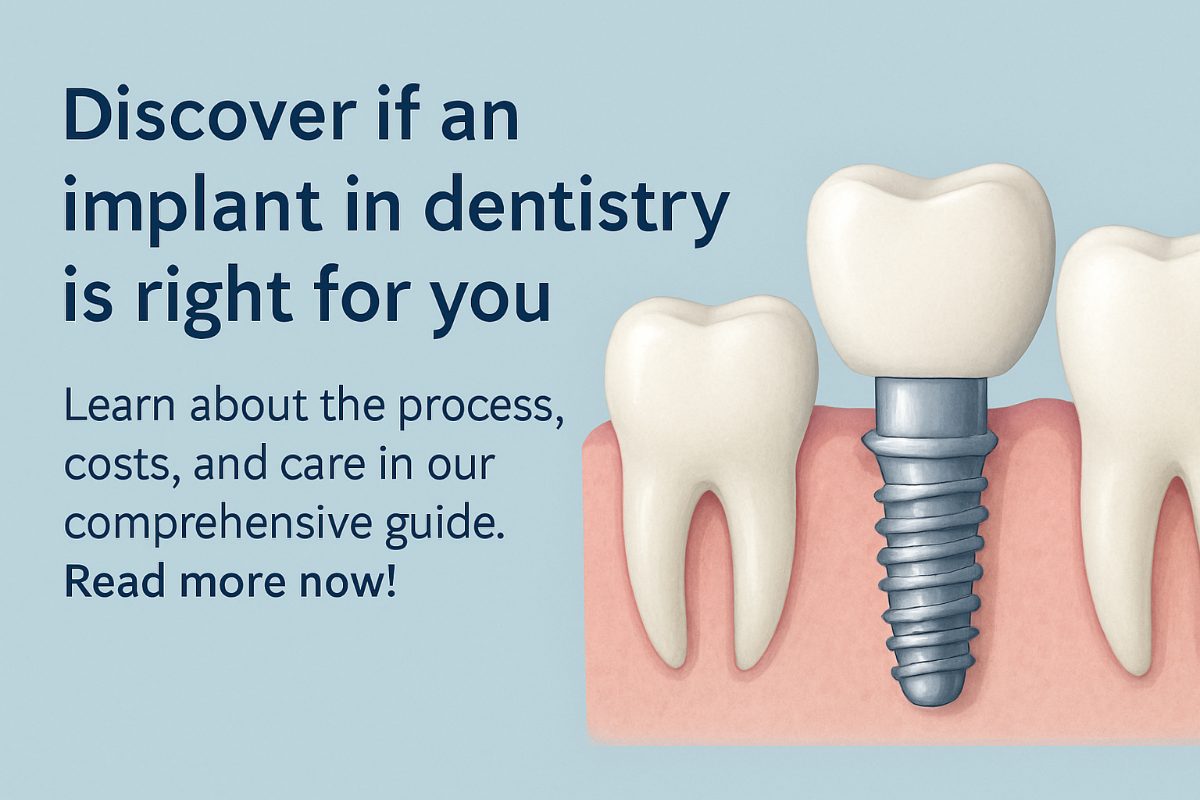
An implant system usually consists of three parts: the implant fixture (the screw placed in bone), the abutment (a small connector), and the final restoration (a crown, bridge, or denture). The fixture bonds with bone, the abutment connects the fixture to the restoration, and the restoration restores looks and function.
Common materials
Most implants are made from titanium or zirconia. Titanium is strong, biocompatible, and well-bonded to bone. Zirconia is a metal-free ceramic option that may be chosen for cosmetic reasons or for those with metal sensitivity. Both materials are proven and widely used in dental implant treatments.
Who Is a Good Candidate for Dental Implants?
Good candidates are adults with healthy gums and enough jawbone to support dental implants. Healthy gums and bone help the implant fuse and stay stable. If the bone is thin, a graft can sometimes rebuild it. Medical health matters. Well-controlled diabetes, not smoking, and careful review of medications (like certain osteoporosis drugs) improve success. Active smokers or uncontrolled health problems may need extra evaluation. Implants are usually not placed until jaw growth is finished, so they’re generally for adult patients.
Types of Implants and Treatment Options
Single-tooth implants
Single-tooth implants replace one missing tooth with a single implant and crown. They avoid cutting down healthy teeth nearby, thereby preserving the surrounding tooth structure.
Multiple implants and implant-supported bridges
When several teeth are missing, two or more implants can support a bridge. This restores several teeth without relying on neighboring teeth for support, making the repair more durable.
Full-arch solutions (All-on-4/All-on-X) and overdentures
Full-arch restorations use a few strategically placed implants to support an entire set of upper or lower teeth. These options, often called All-on-4 or All-on-X, offer stronger chewing, greater stability, and better bone preservation than traditional dentures. Implant-supported overdentures snap onto implants for improved retention.
Special cases
Mini implants are smaller and can help stabilize dentures. Zygomatic implants anchor in the cheekbone when the upper jawbone is missing. Bone grafts and sinus lifts are common additional procedures when the jaw lacks volume for standard implants.
The Implant Process: Step by Step
Initial exam and planning
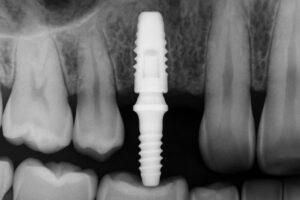
First, your dentist will perform an exam, X-rays, and, often, a 3D scan to map your jaw. Planning creates the right implant size, position, and timeline for your needs.
Preparatory treatments
Some patients need extra work first: removing damaged teeth, treating gum disease, or adding bone with a bone graft. These steps improve the long-term success of dental implants.
Surgical placement and healing
Surgery places the implant into the bone. Healing time varies but typically takes a few months as the implant bonds to bone (osseointegration). Temporary teeth may be used during the healing period.
Restoration and follow-up
After healing, the abutment is attached, and impressions (often digital scans) are made for the final crown or denture. Regular checkups ensure proper fit and oral health.
Risks, Complications, and How to Reduce Them
Risks include infection, implant failure, nerve irritation, or sinus issues for upper implants. Choosing an experienced team, careful planning, good surgical technique, and following post-op care all reduce risks. Contact your dentist for persistent pain, swelling, numbness, or looseness.
Cost, Insurance, and Financing Basics
Price depends on how many implants are needed, whether grafting or extra surgery is required, the materials used, and lab work. Many dental plans only cover part of the cost. Financing and payment plans can make dental implants more affordable. Ask your provider for a detailed estimate and payment options.
Longevity and Home Care for Implants
With good home care and regular dental visits, implants can last decades. Brush twice daily, floss around implants, and use any recommended tools, such as interdental brushes. Routine professional cleanings and exams help spot problems early.
Choosing Implants vs. Bridges or Dentures
Implants preserve bone, offer better stability, and look more like natural teeth, but cost more up front. Bridges are quicker and sometimes less expensive, but require altering adjacent teeth. Dentures can be affordable but may shift and do not prevent bone loss. Your dentist will weigh function, appearance, cost, and long-term health to recommend the best option.
About Sloan’s Lake Dental and Implant Care
Sloan’s Lake Dental offers modern, patient-focused dental implants with conservative, personalized care. The team includes Dr. Sage Pollack, an Associate Fellow of the American Academy of Implant Dentistry, plus Drs. Flaksman and Le, who bring broad surgical and restorative expertise. The practice uses an in-house lab, iTero digital scanning, advanced surgical tools, and sedation options to improve comfort and outcomes.
Next Steps: How to Get Started
At a consultation, you can expect a full exam, imaging, and a customized plan. Bring a list of questions about timeline, cost, materials, and recovery. If you’re curious about implants in dentistry in Denver and want a clear plan tailored to you, schedule an evaluation to learn your options and next steps. Call or book online to get started.