
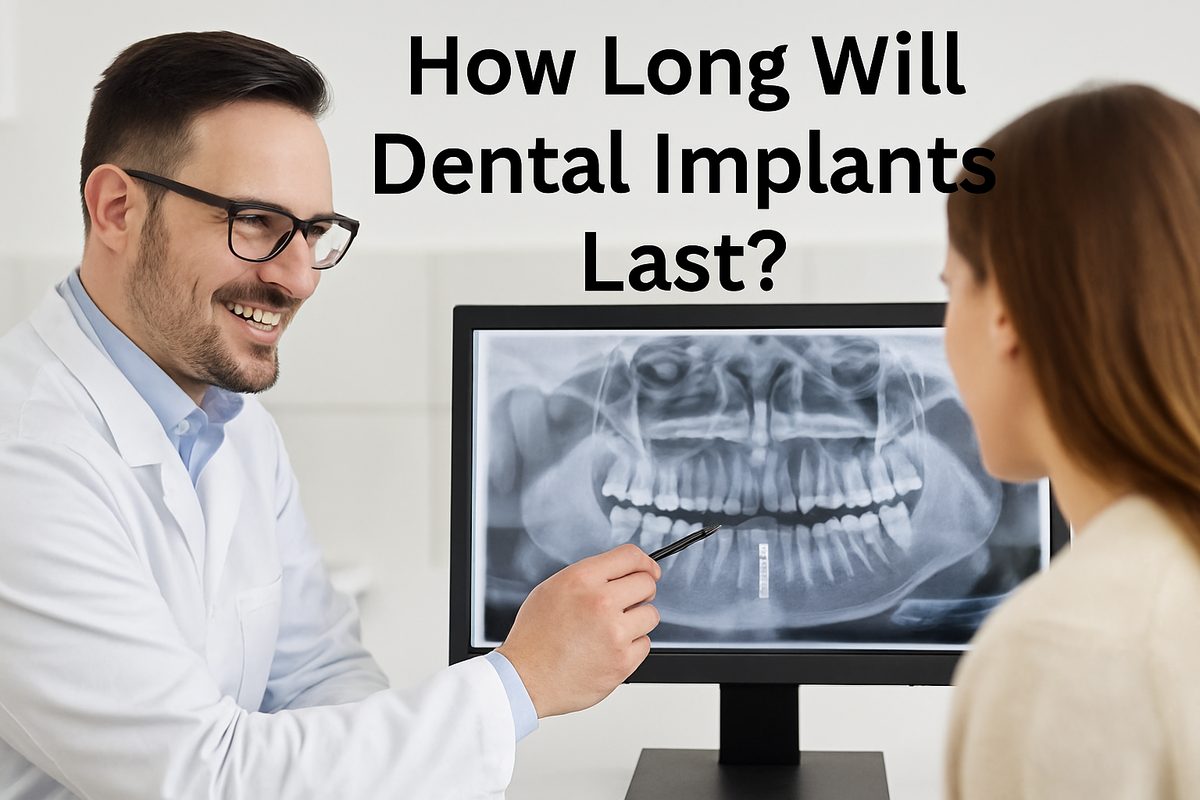
Dental implants replace missing teeth with a titanium or zirconia post anchored into the jaw and a crown, bridge, or full-arch prosthetic on top. Patients often ask, “How long will dental implants last?” because implants are a long-term investment. The answer depends on the implant hardware, the restoration (crown or denture), your bone and health, and how well you care for them. Below, we summarize research-based averages and clear steps you can take to make implants last as long as possible.
Average lifespan: what the research shows
Many studies show implant fixtures (the metal or ceramic post) have high survival rates—often 90–98% at 5–10 years. Long-term data suggest many fixtures last 20 years or more with good care. The visible part—the crown or prosthetic—usually needs to be replaced sooner. Crowns last 10–15 years on average, while full-arch prosthetics may require more frequent repairs. Published averages vary because patient health, location, and prosthetic type change outcomes. If you’re asking how long dental implants will last in Denver, CO, expect the implant post to outlast the prosthetic if you maintain good oral health.
Key factors that determine how long dental implants last
Implant materials and design
Titanium implants have decades of proven success. Zirconia is an alternative for patients who want metal-free options. Surface treatments and design affect how well the bone fuses to the implant (osseointegration), a crucial factor for long-term stability.
Bone quality and placement
A dense, healthy jawbone supports implants best. Poor bone volume or density may require grafting. Accurate placement by the surgeon also reduces stress on the implant and improves longevity.
Type of restoration
A single crown over an implant generally has fewer complications than long-span bridges or full-arch restorations. All-on-4 or other full-arch solutions are durable but may need more maintenance or component replacements over time.
Patient health and habits
Smoking, uncontrolled diabetes, bruxism (teeth grinding), and poor oral hygiene raise the risk of implant failure. Healthy habits and medical control can significantly extend implant life.
Maintenance and professional follow-up
Regular dental cleanings, home care, and checkups let your team catch early signs of trouble, such as peri-implant inflammation. Routine X-rays help monitor bone levels around the implant.
Signs your implant may be failing
Watch for persistent pain, mobility, swollen or bleeding gums, pus, or bone loss on x-ray. Any of these signs needs prompt evaluation to improve the chance of saving the implant.
What to expect for repairs or replacements
Often, the crown or abutment is replaced without touching the implant post. Full implant replacement is more complex and may require bone grafts and longer healing times. Costs vary based on the work needed and whether infection or bone loss is present.
Practical steps to maximize implant lifespan
Brush twice daily, floss or use interdental brushes, avoid smoking, wear a nightguard if you grind, and keep regular dental visits. Manage chronic conditions like diabetes and follow your dentist’s maintenance plan.
Why consider Sloan’s Lake Dental for implant longevity
If you want a local team focused on lasting results, Sloan’s Lake Dental offers precise restorations from an in-house lab, iTero® digital scanning, and advanced surgical tools. Dr. Sage Pollack holds an AAID Associate Fellowship and leads implant care, with Drs. Stephanie Flaksman and Dat Le are contributing surgical and restorative expertise.
Next steps: scheduling an implant longevity consultation
To get a realistic answer to “how long will dental implants last in Denver, CO,” schedule an exam to review your bone health and habits. A tailored plan gives the best chance of long-lasting results and a confident smile.