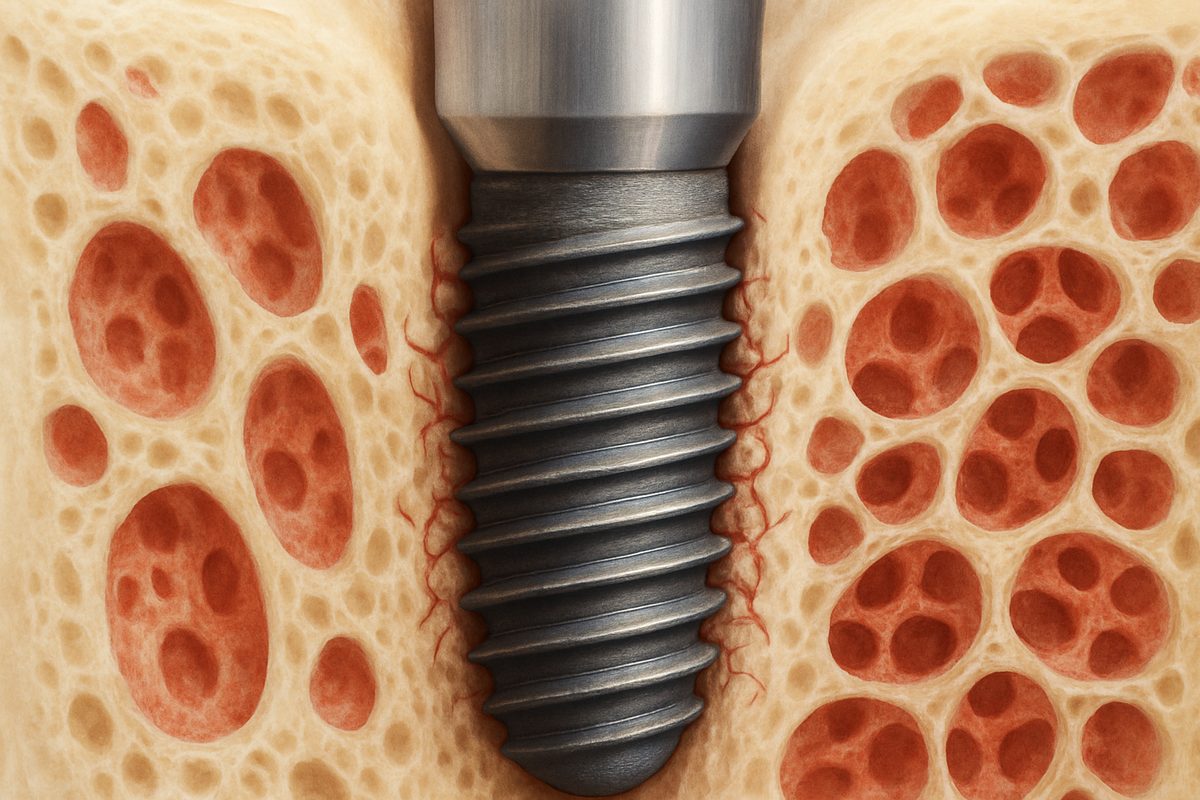
Implant healing is the process your body uses to accept a dental implant and rebuild bone and soft tissue around it. Good healing for dental implants matters because it determines whether the dental implant becomes a stable, long-lasting tooth replacement. This guide explains the typical timeline, common symptoms, everyday care, warning signs, factors that affect healing, when your final tooth crown is placed, and how experienced care can improve outcomes — including what to expect when a dental implant is healing in Denver, CO.
Typical Implant Healing Timeline
0–48 hours: Expect light bleeding, mild to moderate pain, and swelling. Ice and short-term pain meds usually control symptoms. Keep the head elevated and avoid strenuous activity. First 1–2 weeks: Soft tissue closes and sutures may dissolve or be removed. Mild soreness, occasional oozing, and bruising are common. If swelling peaks after 72 hours or bleeding is heavy, call your dentist. 1–3 months: Bone remodeling and early osseointegration begin. The dental implant starts to bond to the jaw. You may have reduced sensitivity and most day-to-day discomfort should fade. Follow-up visits check stability. 3–6 months: Final maturation of bone around the dental implant. Most clinicians place the permanent tooth crown, dental bridge, or denture after testing for stability and proper integration.
Common Symptoms During Healing of Dental Implants
Pain, swelling, and bruising: Mild to moderate pain that decreases over days is normal. Swelling usually peaks in 48–72 hours and improves after. Bruising can appear on the face and dissipates in 1–2 weeks. Minor bleeding and numbness: Light oozing early on is expected. Temporary numbness can occur if local nerves were affected; persistent numbness beyond a few weeks should be checked.
When symptoms may signal a problem
Seek prompt care for increasing pain, persistent or worsening swelling, fever, foul taste or smell, pus, or a loose dental implant. These can indicate infection or failed integration and need same-day evaluation.
How to Care for Your Mouth During Implant Healing
Daily oral hygiene: Gently brush teeth away from the surgical site and use a soft toothbrush. Rinse with saltwater or a dentist-recommended antimicrobial rinse — avoid vigorous swishing. Diet and activity: Stick to soft foods for 1–2 weeks and avoid chewing directly on the dental implant site until cleared. Avoid smoking and heavy exercise early on, as both slow healing. Medication and home remedies: Use prescribed antibiotics and pain meds as directed. Cold packs during the first 48 hours reduce swelling; warm compresses after 72 hours can ease stiffness.
Things That Affect Healing Periods of Dental Implants
Patient factors like smoking, poorly controlled diabetes, certain medications, and low bone density slow healing. Procedure factors — skillful dental implant placement, whether immediate loading or delayed loading is chosen, and the need for bone grafting — also change the timeline. Good follow-up care and healthy habits speed recovery.
When You’ll Receive Your Final Tooth Crown or Dental Bridge
Clinicians base timing on clinical stability and tests such as x-rays and mobility checks. Temporary restorations protect the area while bone integrates. Once the dental implant shows solid integration, your dentist will take final impressions and deliver a permanent tooth crown.
When to Contact a Dentist About Healing Dental Implants
Contact your dentist same-day for severe or increasing pain, heavy bleeding, fever, pus, or a loose dental implant. At follow-ups expect imaging, probing, and possible adjustments or treatments like cleaning, antibiotics, or further grafting if needed.
How an Experienced Team Helps Dental Implants Heal
An experienced team improves predictability. Sloan’s Lake Dental uses iTero digital scanning, an in-house lab for precise restorations, sedation options for comfort, and advanced surgical tools to support reliable healing for dental implants. Dr. Sage Pollack’s implant fellowship and the team’s combined expertise help manage complex cases and tailor care.
Plan Your Dental Implant Care With Confidence
If you’re planning on getting dental implants or are concerned about dental implant healing, contact us to schedule a consultation to review your case, timeline, and comfort options. A clear plan and experienced care make a strong recovery and a lasting result.